
The Trend Isn’t the Idea
Knowing what’s trending is the cheapest information in the industry.
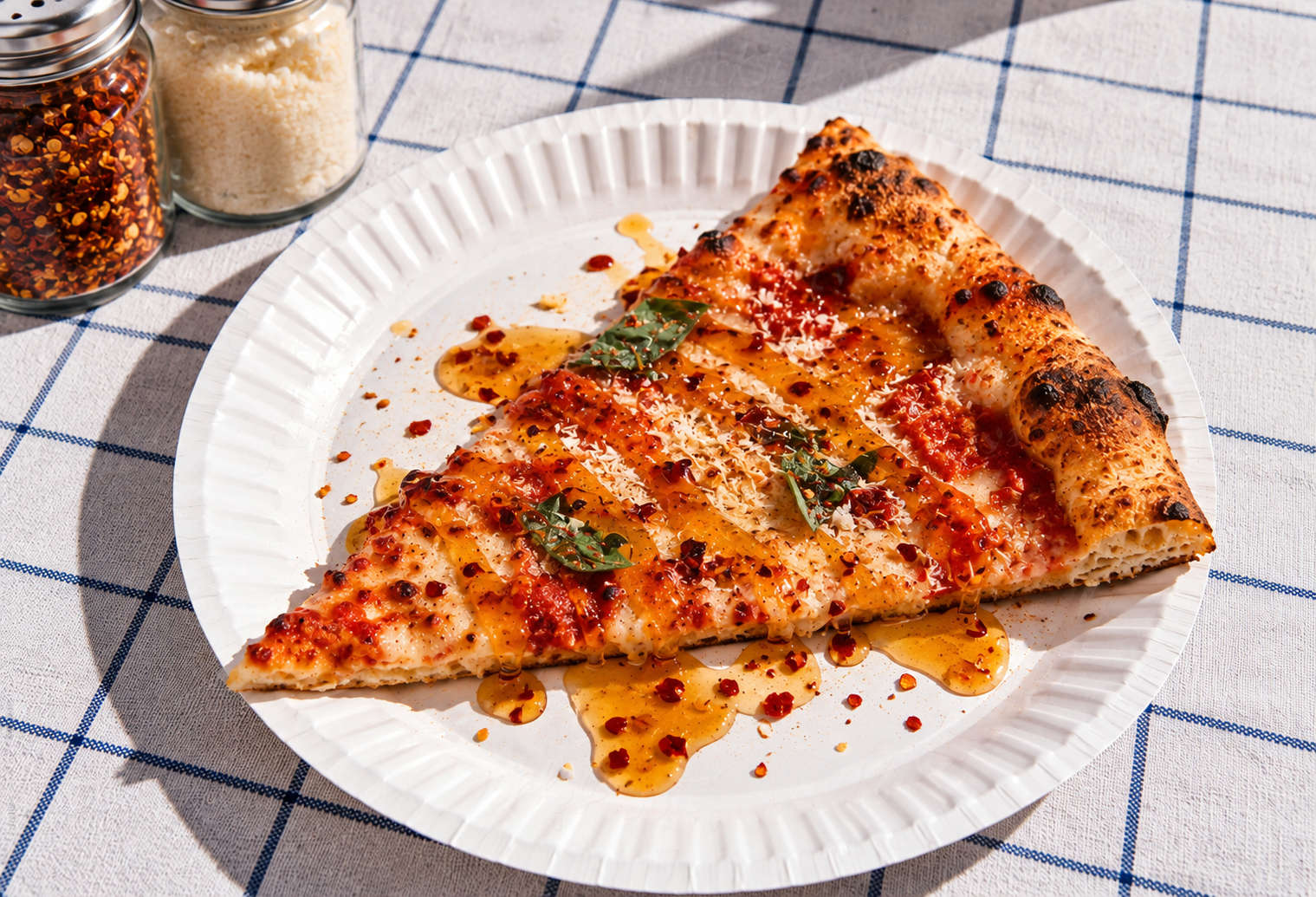
Hot honey had a good run. Then it went completely off the rails. First it started showing its nose around pizza, fried chicken, and chips — all of which are totally valid spots for sweet+heat to be skulking around. Nuts, cheese boards, savory snacks, fine. And then, as is the case with many flavors before it (coughbaconcough), hot honey started going too far. Beer, ice cream… if a food could be packaged, someone hit it with a hot honey drizzle, called it R&D and collected their medal.
Unlike some other dubious flavor trends of yore, hot honey had every reason to blow up the way it did. It’s a cold, hard fact that heat and sweet are a killer combo. But once something’s on every. single. menu. within a five-mile radius, hot honey
isn’t a hot new trend — it’s a reliable ol’ staple. Everybody’s already standing in it. Your competitors have TikTok too, and knowing what’s popular is not, technically, a skill.
The actual question — the one worth asking — is why hot honey hit in the first place. Not what. Why.
Here’s a theory: hot honey was never really about honey, or even heat. It was the collision of extremes. Something familiar and cozy getting jumped by something that bites back. Fire and ice; comfort and chaos. And if the element of surprise is the secret sauce behind the sauce, then we’ve got real options now instead of one increasingly sad squeeze bottle.
What happens if the sweetness isn’t honey? What if the heat isn’t chili at all? What if you push the opposites attract theory to somewhere nobody in the hot honey gold rush has bothered to go? That’s a lot more interesting than being the forty-first company to drizzle hot honey on a thing.
Chili crisp is another trend running a similar play in a different outfit. The heat gets the headline, but there’s also crunch, there’s umami, there’s a slick of chili oil and little red flecks that look simply fabulous on camera. It delivers flavor, texture and aesthetics; half the appeal is that you can watch it working before it hits your tongue. Condensing all of that down into “chili crisp flavor” misses the point. You take out the crunch, you take out the visual chaos, and congratulations, you’ve kept the name and thrown away the entire reason anyone cared.
“Dirty” soda — which is soda given the iced latte treatment with flavored syrups and splashes of creamer — isn’t really about the soda. People have not suddenly gotten extra picky about their Dr Pepper. It’s about control: taking a mundane beverage and doing whatever you want to it until it feels uniquely yours.
That’s the pattern. The actual interesting part of a trend is never the part with the name on it — it’s buried underneath, and you have to go digging for it. What’s this thing actually made of? Which tensions, which textures, which contradiction is quietly doing all the work? Where hasn’t that idea gone yet? And then the question nobody in the trend deck ever bothers asking: can it survive the way you’d actually have to make it?
That last one is the expensive lesson, and we’ve watched people learn it the hard way more than once. A flavor can be genuinely incredible in a test kitchen, in somebody’s apartment, in a 22-second video with great lighting, and turn into a completely different animal the second it meets manufacturing, shelf life, and an ingredient statement. Heat changes things. Protein changes things. Pull the sugar out and suddenly flavors show up that absolutely nobody invited to the party. Time changes almost everything eventually, and it is never in a hurry to tell
you which way.
That’s a longer conversation (and a genuinely fun one!), but it starts here, with actually knowing what made the thing worth making before anyone tries to build a production line around it.
So: should you chase trends? No, but you shouldn’t ignore them, either. Take them apart. Find the piece that actually made people care, and go look for the place that piece hasn’t been yet. Everyone in your category is reading the same trend reports you are; that was never the advantage. The advantage is being the one who bothered to look underneath